
What Are Harmful Algal Blooms (HABs)?
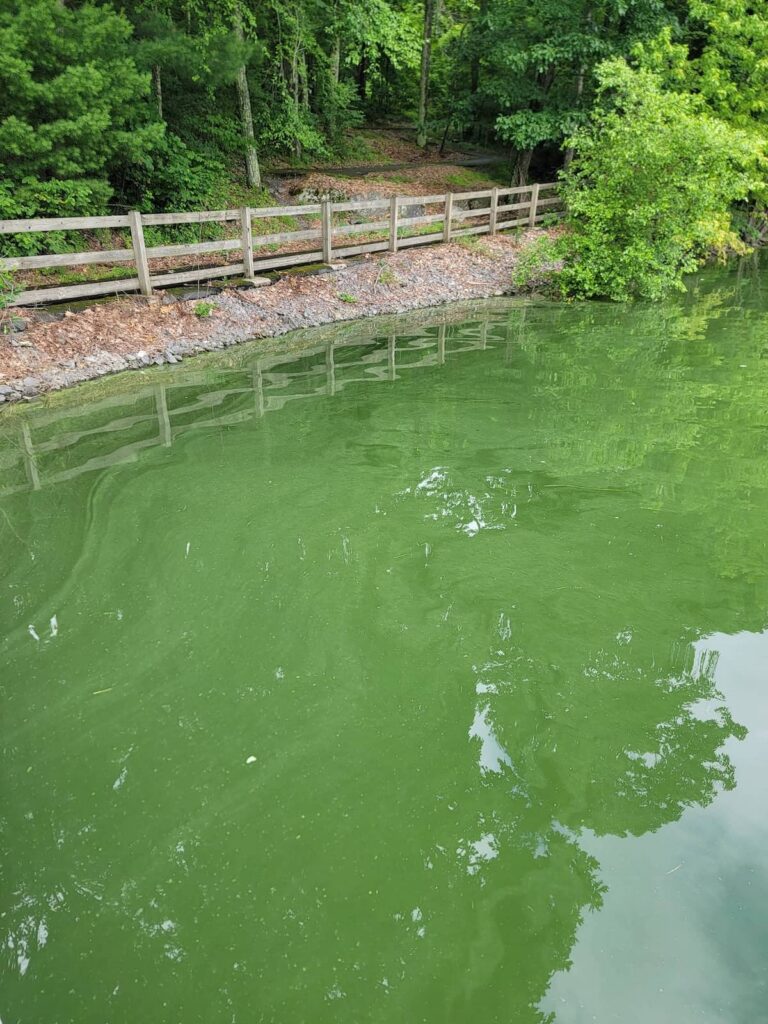
Harmful algal blooms (HABs) occur when certain types of algae—often referred to as cyanobacteria or blue-green algae—grow excessively in freshwater systems. While these organisms are naturally present in aquatic ecosystems, under the right conditions they have the potential to produce dangerous toxins that threaten human, animal, and environmental health.
Why Do HABs Happen?
HABs are most common in late summer and early fall, when warm temperatures and high nutrient levels—particularly nitrogen and phosphorus—create ideal conditions for algal growth. These nutrients often come from:
- Stormwater runoff
- Soil erosion
- Failing septic systems
- Streambank and lake shore erosion
- Lawn fertilizers
- Agricultural runoff
The occurrence of HABs is increasing in frequency and duration across the world.
Risks to Health and Environment
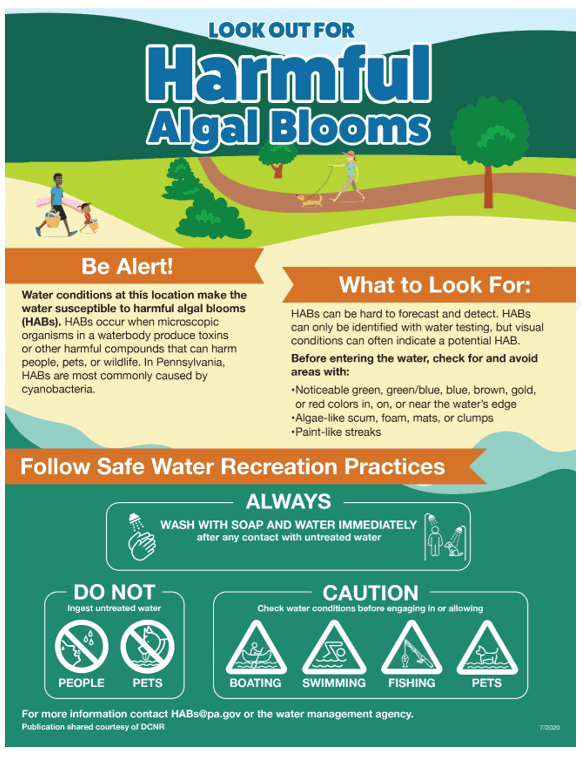
Exposure to HABs can occur through swimming, boating, fishing, or drinking contaminated water. If present, toxins may cause:
- Skin, eye, and throat irritation
- Vomiting and diarrhea
- Neurological symptoms
- Illness or death in pets, livestock, and wildlife
Dense blooms also block sunlight, deplete oxygen, and disrupt aquatic ecosystems, leading to fish kills and habitat degradation.
Pennsylvania’s Response
The Pennsylvania HABs Task Force coordinates monitoring and response efforts across multiple agencies, including the Department of Health, Department of Environmental Protection, Department of Conservation and Natural Resources, and the Fish and Boat Commission.
HABs Testing
Sampling a bloom and analyzing for potential toxins is complex and costly. The cost for analysis of a single site on a single day often approaches and can exceed $1,000. Conditions can change rapidly, so test results are only indicative of conditions at the time a sample is taken. Pennsylvania currently has no regular HAB sampling program, but the Department of Environmental Protection and the HABs Task Force perform testing around the Commonwealth. The results of Task Force sampling are posted on the HABs Dashboard to track bloom activity and inform the public.
What the Lake Wallenpaupack Watershed Management District Is Doing
Since 1979, we have worked within our 219 square mile watershed to reduce nutrient pollution to Lake Wallenpaupack. Controlling nutrients is the best way to reduce algal growth and we have focused our efforts on implementing nutrient reduction practices for decades. We have obtained millions of dollars in grant funding for our watershed to control nutrient pollution by constructing hundreds of projects including stormwater management, erosion control, lake shore stabilization, and agricultural runoff control projects.
While LWWMD has no regulatory authority, since 2019 we have been advocating for the development of a comprehensive HABs management, monitoring, and response strategy from Commonwealth agencies.
Controlling nutrients and addressing HABs in a lake the size of Lake Wallenpaupack is a complex task. For several decades, controlling nutrients through watershed management proved adequate for preventing algal growth. Severe storm events, hotter weather, and many other environmental changes in the past decade have reduced the efficacy of watershed management. Most recently, we have begun conversations with lake management professionals working in other areas of the United States to learn what additional steps can be taken.
What You Can Do
There is no immediate solution, but preventing HABs starts with reducing nutrient pollution:
- Reduce stormwater runoff from your property by minimizing impervious surfaces and promoting infiltration of stormwater
- Use phosphorus-free fertilizers
- Maintain your septic system by pumping every three years and/or upgrade your septic system if it is failing
- Avoid wake-surfing and wakeboarding activities in the shallow and narrow parts of the lake to prevent shoreline erosion and re-suspension of sediment from prop-wash and wave action
- Plant native vegetation to absorb runoff
- Avoid dumping leaves and yard waste into waterways and stormwater drainage infrastructure
- Report suspected blooms using the HAB Reporting Form
- Contact your legislators and ask them to support funding and additional capacity for the Commonwealth’s HABs Task Force and a comprehensive program to address the impacts of HABs on all Pennsylvanians.
Stay Informed
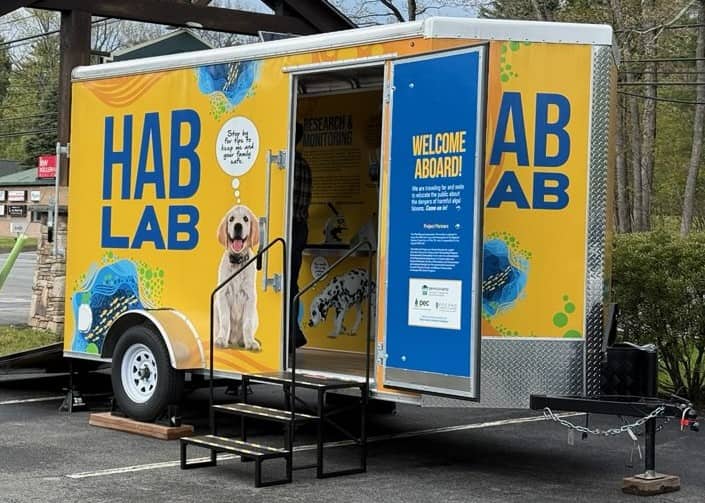
HABs are increasing globally. Closer to home, more and more lakes across the mid-Atlantic are experiencing HABs. It’s important to stay informed. To that end, LWWMD recently partnered with Lacawac Sanctuary to obtain grant funding to build a community educational tool called the HAB Lab. The HAB Lab is a mobile education trailer available to our community partners for festivals, programs, and special events. It contains general information about HABs and is designed to help educate our community about HABs. To check availability, or request the HAB Lab for an event, please reach out to us through the “Contact Us” page on our website.
For More Information: The PA Harmful Algal Bloom Task Force maintains a website with information for residents and visitors. For the most up-to-date information, visit the HAB Task Force website here